

INFORMATION
| Full Name | Angiotensin-converting enzyme (ACE) is a zinc-containing dipeptidyl carboxypeptidase widely distributed in mammalian tissues and increases blood pressure by causing blood vessels to constrict. It does that by converting angiotensin I to angiotensin Ⅱ, which constricts the vessels. For this reason, drugs known as ACE inhibitors are used to lower blood pressure. The ACE gene, ACE, encodes two isozymes. The somatic isozyme is expressed in many tissues, mainly in the lung, including vascular endothelial cells, epithelial kidney cells, and testicular Leydig cells, whereas the germinal is expressed only in sperm. Brain tissue has ACE enzyme, which takes part in local RAAS and converts Aβ42 (which aggregates into plaques) to Aβ40 (which is thought to be less toxic) forms of beta amyloid. The latter is predominantly a function of N domain portion on the ACE enzyme. ACE inhibitors that cross the blood–brain barrier and have preferentially select N terminal activity may, therefore, cause accumulation of Aβ42 and progression of dementia. |
|---|---|
| Synonym | ACE1, CD143, DCP, DCP1, ICH, MVCD3 |
| Assay Type | Sandwich |
| Reactivity | Guinea pig |
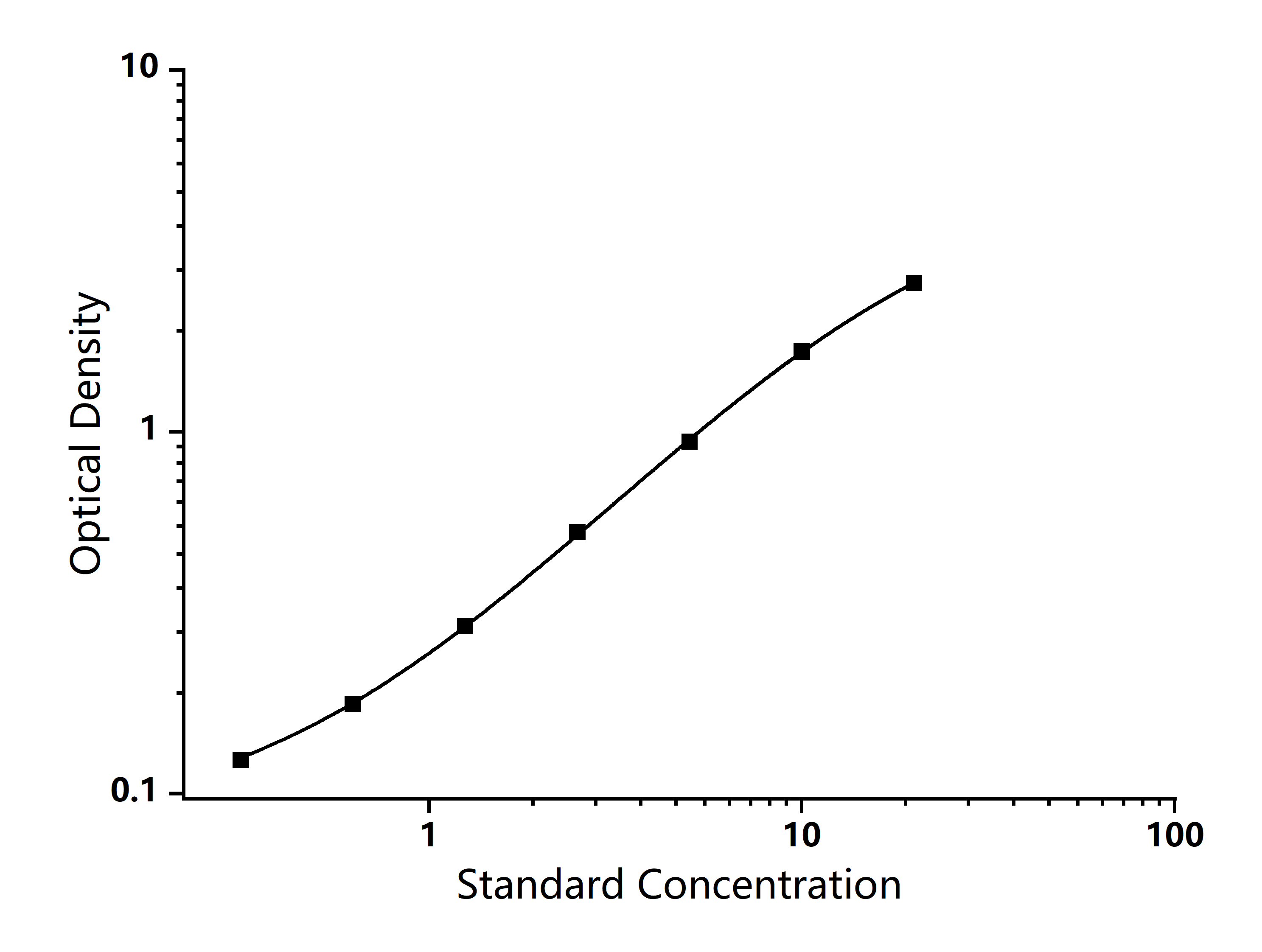
| Range | 0.31-20ng/mL |
| Sensitivity | 0.19ng/mL |
| Sample Type | Serum, plasma and other biological fluids |
| Sample Volume | 100μL |
| Detection Wavelength | OD450 |
| Reaction Duration | 3.25h |
| Transportation Temperature | 2-8°C |
| Specificity | Specifically binds with ACE, no obvious cross reaction with other analogues. |
| Microplate | 96-wells plate breakable into 12 x 8 wells strip |
ELISA KIT COMPONENTS
Upon receipt, unpack promptly and store as recommended in the instructions.
| Components | Specifications | Storage and Notes |
|---|---|---|
| Micro Plate | 96T: 8 wells×12 strips 48T: 8 wells×6 strips | Unopened: -20°C, 12 months Unused: Put it back in the aluminum foil bag and seal it, store it at -20°C. |
| Reference Standard | 96T: 2 vials 48T: 1 vial | Unopened: -20°C, 12 months Please use freshly dissolved standards for each experiment. Discard any unused standards after dissolution. |
| Biotinylated Detection Ab Concentrate (100×) | 96T: 120μL×1 vial 48T: 60μL×1 vial | Unopened: -20°C, 12 months Unused: Please seal the concentrate and store it at -20°C, and discard the working solution. |
| HRP Conjugate Concentrate (100×) | 96T: 120μL×1 vial 48T: 60μL×1 vial | Unopened: -20°C(Protect from light), 12 months Unused: Please seal the concentrate and store it at -20°C, and discard the working solution. |
| Biotinylated Detection Ab Diluent | 14mL×1 | 2-8℃, 12 months |
| HRP Conjugate Diluent | 14mL×1 | 2-8℃, 12 months |
| Reference Standard & Sample Diluent | 20mL×1 | 2-8℃, 12 months |
| Washing Buffer Concentrate (25×) | 30mL×1 | 2-8℃, 12 months |
| Substrate Reagent(TMB) | 10mL×1 | 2-8°C(Protect from light),12 months |
| Stop Solution | 7mL×1 | 2-8°C/Room temperature |
REQUIRED INSTRUMENTS AND REAGENTS
- Microplate reader (450nm wavelength filter).
- Incubator capable of maintaining 37℃.
- 1.5mL EP tube, absorbent paper.
- Pipette and disposable tip: 0.5-10μL, 2-20μL, 20-200μL, 200-1000μL.
- Double distilled water or deionized water.
ASSAY PROCEDURE SUMMARY
STANDARD CURVE
| STD.(ng/mL) | OD-1 | OD-2 | Average |
|---|---|---|---|
| 0 | 0.06 | 0.068 | 0.064 |
| 0.32 | 0.116 | 0.118 | 0.117 |
| 0.63 | 0.169 | 0.169 | 0.169 |
| 1.25 | 0.28 | 0.27 | 0.275 |
| 2.5 | 0.474 | 0.506 | 0.49 |
| 5 | 0.97 | 0.946 | 0.958 |
| 10 | 1.702 | 1.758 | 1.73 |
| 20 | 2.46 | 2.476 | 2.468 |
RECOVERY
The recovery of Guinea pig ACE spiked to three different levels in samples throughout the range of the assay in various matrices was evaluated.
LINEARITY
To assess the linearity of the assay, samples containing and/or spiked with high concentrations of Guinea pig ACE in various matrices were diluted with the Reference Standard & Sample Diluent to produce samples with values within the dynamic range of the assay.
PRECISION(%)
Intra-Assay Precision (Precision within an assay): Three samples of known concentration were tested twenty times on one plate to assess intra-assay precision.
Inter-Assay Precision (Precision between assays): Three samples of known concentration were tested in twenty separate assays to assess inter-assay precision. Assays were performed by at least three technicians using two lots of components.
| Item | Intra-assay Precision | Inter-assay Precision | ||||
|---|---|---|---|---|---|---|
| Sample | 1 | 2 | 3 | 1 | 2 | 3 |
| n | 20 | 20 | 20 | 20 | 20 | 20 |
| Mean (ng/mL) | 1.1 | 2.9 | 8.28 | 1.15 | 2.68 | 7.94 |
| Standard deviation | 0.06 | 0.15 | 0.34 | 0.08 | 0.11 | 0.37 |
| CV(%) | 5.65 | 5.11 | 4.1 | 6.9 | 4.13 | 4.72 |
STABILITY
Perform stability testing of the kit at 37°C and 2-8°C and obtain relevant data.
| ELISA kit(n=5) | 37°C for 1 month | 2-8°C for 6 months |
|---|---|---|
| Average(%) | 80 | 95-100 |