
Bacterial antigens serve as core immunostimulatory components for the design and production of effective antibacterial vaccines. These targeted biomolecules can trigger specific innate and adaptive immune responses in host organisms, building long-term immune defense against invasive pathogenic bacteria. Clarifying the classification, immune activation mechanisms and screening criteria of bacterial antigens is the fundamental premise for developing safer, more efficient and broad-spectrum antibacterial vaccines. This article focuses on mainstream bacterial antigen types applied in current vaccine research, elaborates their working mechanisms in immune activation, and summarizes cutting-edge technical strategies for novel vaccine antigen screening and development.
Bacterial antigens refer to specific biomolecules distributed on the bacterial surface, periplasmic space or intracellular cytoplasm. These molecules can be specifically recognized by host immune cells, initiating cascade immune responses to eliminate invading pathogens. Apart from being critical vaccine raw materials, bacterial antigens are also key virulence factors that mediate bacterial adhesion, invasion and immune escape during clinical bacterial infections. Therefore, targeted application of these antigens can precisely activate protective immunity without causing actual bacterial infection, which lays the theoretical foundation for modern antibacterial vaccine design.
According to molecular composition, spatial distribution and immune characteristics, bacterial antigens applied in vaccine development are divided into three dominant categories: protein antigens, capsular polysaccharide antigens and bacterial toxoids derived from original toxins. Each antigen type possesses unique immune advantages and application limitations, which determines their differentiated application scenarios in vaccine research.
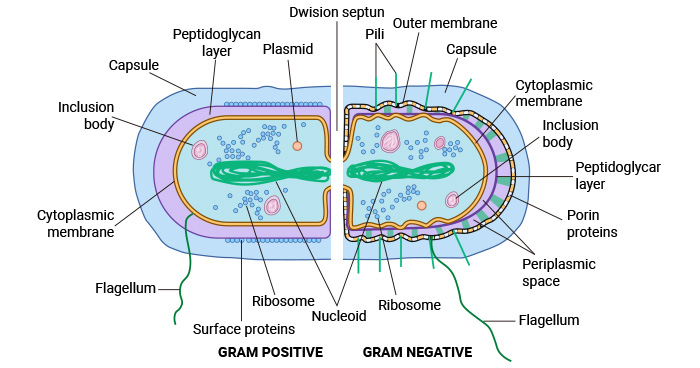
Figure 1. Bacterial Cell Structure and Organization (Cited from: https://www.sciencedirect.com/science/article/abs/pii/B9780128187319001919?via%3Dihub)
Protein antigens are the most mainstream and reliable candidate molecules for subunit bacterial vaccines. Common protein antigens include bacterial outer membrane proteins, flagellar structural proteins (H antigens), fimbrial/pili adhesion proteins and metabolic enzymes secreted by bacteria. Compared with other antigen types, protein antigens feature high immunogenicity, stable antigen epitopes and capability to activate both humoral and cellular immunity simultaneously.
Typical clinical application cases include pneumococcal pilus proteins, Escherichia coli fimbrial structural proteins, and outer membrane proteins (OMPs) from Neisseria meningitidis. In modern vaccine engineering, full-length native proteins, truncated immunodominant peptides, natural subunit proteins and recombinant expressed proteins are all available forms of protein antigens. Recombinant protein antigens are currently preferred by researchers thanks to their high purity, low impurity pollution and easy large-scale production.
Capsular polysaccharides covering the outermost layer of pathogenic bacteria are primary protective antigens against host immune clearance. Meanwhile, O antigens located at the terminal of lipopolysaccharide (LPS) of Gram-negative bacteria help bacteria evade host phagocytosis, becoming another key vaccine target for Gram-negative pathogen prevention.
Nevertheless, pure polysaccharide antigens belong to T-cell independent antigens. They fail to induce effective T helper cell response, cannot trigger immune memory formation, and show extremely poor immune effects in infants and young children with immature immune systems. To fix this defect, researchers covalently couple polysaccharide antigens with carrier proteins to manufacture conjugate vaccines. The protein carrier effectively recruits T cell assistance, significantly improving overall immunogenicity and long-term immune protection.
Classic licensed conjugate vaccines cover Haemophilus influenzae type b vaccine, multivalent pneumococcal conjugate vaccine and meningococcal polysaccharide conjugate vaccine, which have achieved outstanding public health prevention effects worldwide.
Most severe clinical symptoms caused by pathogenic bacteria are not induced by bacterial proliferation itself, but by highly toxic exotoxins secreted during bacterial growth. For toxin-mediated bacterial diseases, vaccines are designed to induce neutralizing antibodies against toxins rather than bacteria themselves.
Wild bacterial toxins including diphtheria toxin from Corynebacterium diphtheriae and tetanus toxin from Clostridium tetani retain complete immunogenicity but carry strong biological toxicity. Through formaldehyde chemical inactivation, native toxins are converted into non-toxic toxoids. Toxoids can perfectly simulate native toxin epitopes to induce high-level neutralizing antibodies in vivo. Once real bacterial infection occurs, pre-existing antibodies can bind and block toxin activity immediately to avoid host tissue damage. Tetanus and diphtheria vaccines are the most mature commercial toxoid vaccines globally.
Vaccination utilizing bacterial antigens simulates mild, non-pathogenic bacterial stimulation to train the host immune system. The whole immune response is divided into innate immune recognition, adaptive cellular immunity, adaptive humoral immunity and long-term immune memory formation, forming a complete layered defense system.
After vaccine injection, pattern recognition receptors (PRRs) distributed on the surface of innate immune cells firstly identify pathogen-associated molecular patterns (PAMPs) carried by bacterial antigens, including peptidoglycan, LPS, flagellin and teichoic acid. Main PRRs involved in this process are Toll-like receptors (TLRs) family proteins.
After successful recognition, macrophages, dendritic cells and neutrophils are rapidly activated to release pro-inflammatory cytokines, recruit more immune cells to the vaccination site, and initiate phagocytosis simulation. Taking LPS recognition as a classic example: membrane receptor CD14 binds LPS-binding protein (LBP) to form a LPS-LBP-CD14 triple complex, which further combines with TLR4/MD-2 complex. This reaction activates downstream NF-κB and MAPK signaling pathways, promoting massive secretion of TNF-α, IL-6 and other inflammatory cytokines to amplify early immune response rapidly.
Dendritic cells, serving as professional antigen-presenting cells (APCs), engulf and process vaccine bacterial antigens, then present processed antigenic peptides to downstream T cells via major histocompatibility complex (MHC) molecules. MHC Class II molecules present antigens to CD4+ helper T cells to regulate overall adaptive immune response; MHC Class I molecules deliver antigens to CD8+ cytotoxic T cells, which is critical for clearing intracellular parasitic bacteria and infected host cells.
Activated CD4+ helper T cells secrete multiple cytokines to drive B cell proliferation, differentiation and specific antibody production. Generated antibodies play three major protective roles: neutralization blocking bacterial adhesion and toxin invasion; opsonization wrapping bacteria to enhance phagocytosis of immune cells; complement activation triggering bacterial lysis via complement system cascade reaction. IgG and IgM are the dominant antibody subtypes participating in antibacterial humoral immunity.
One core advantage of vaccines is long-term immune protection relying on immune memory. After primary vaccination, antigen-specific memory B cells and memory T cells stably survive in vivo. When the host contacts the same pathogenic bacteria again, memory cells can be activated within hours to generate faster, stronger and more effective secondary immune response, preventing clinical bacterial infection fundamentally.
With the emergence of multi-drug resistant bacteria and incomplete protection of traditional vaccines, novel bacterial vaccine antigen development has become a research hotspot. Currently, mainstream discovery technologies include reverse vaccinology, immunoproteomics and surface antigen screening technology, with unified screening criteria for qualified vaccine antigens.
- High immunogenicity: The antigen can stably trigger robust innate and adaptive immune responses without additional strong adjuvants.
- Pathogen specificity: No cross-reaction with human self-tissues or symbiotic harmless flora to avoid autoimmune adverse reactions.
- Excellent structural stability: Maintain complete antigen epitopes during vaccine preparation, storage and in vivo delivery without activity attenuation.
- High strain conservation: Conserved among different epidemic strains of the same bacteria, ensuring broad-spectrum cross-strain immune protection.
Reverse Vaccinology: This bioinformatics-based technology analyzes bacterial whole-genome data to predict surface-expressed or secreted antigen proteins without culturing live pathogens. It greatly shortens antigen screening cycle and improves experimental safety. This technology has successfully screened protective antigens for Neisseria meningitidis and Acinetobacter baumannii.
Immunoproteomics: Compensate for pure computational prediction defects of reverse vaccinology. Researchers use serum samples from infected patients or immunized animals to verify actual immunogenicity of predicted antigens via proteomic detection. The combination of reverse vaccinology and immunoproteomics achieves dual verification of prediction and experiment, improving antigen screening accuracy significantly.
Surface Antigen Screening Technology: Bacterial surface antigens are the first molecules contacting host immunity. Peptide phage display technology is widely used to screen novel surface protective antigens, providing abundant candidate targets for next-generation multivalent bacterial vaccines.
Bacterial antigens are irreplaceable core components of antibacterial vaccines. Existing mature vaccines based on protein antigens, polysaccharide conjugates and toxoids have effectively reduced global mortality and morbidity of diphtheria, tetanus, pneumococcal and meningococcal infectious diseases. However, multiple challenges still exist, including difficult vaccine development for intracellular bacteria such as Mycobacterium tuberculosis and multi-drug resistant Staphylococcus aureus.
In the future, the integration of synthetic biology, nanomaterial delivery system and multi-epitope vaccine design will further optimize vaccine safety, immunogenicity and delivery efficiency. Continuous innovation of antigen screening and vaccine preparation technologies will further promote the prevention and control of global bacterial infectious diseases.