
JAK‑STAT Signaling Pathway
Basic Definition of the JAK‑STAT Signaling Pathway
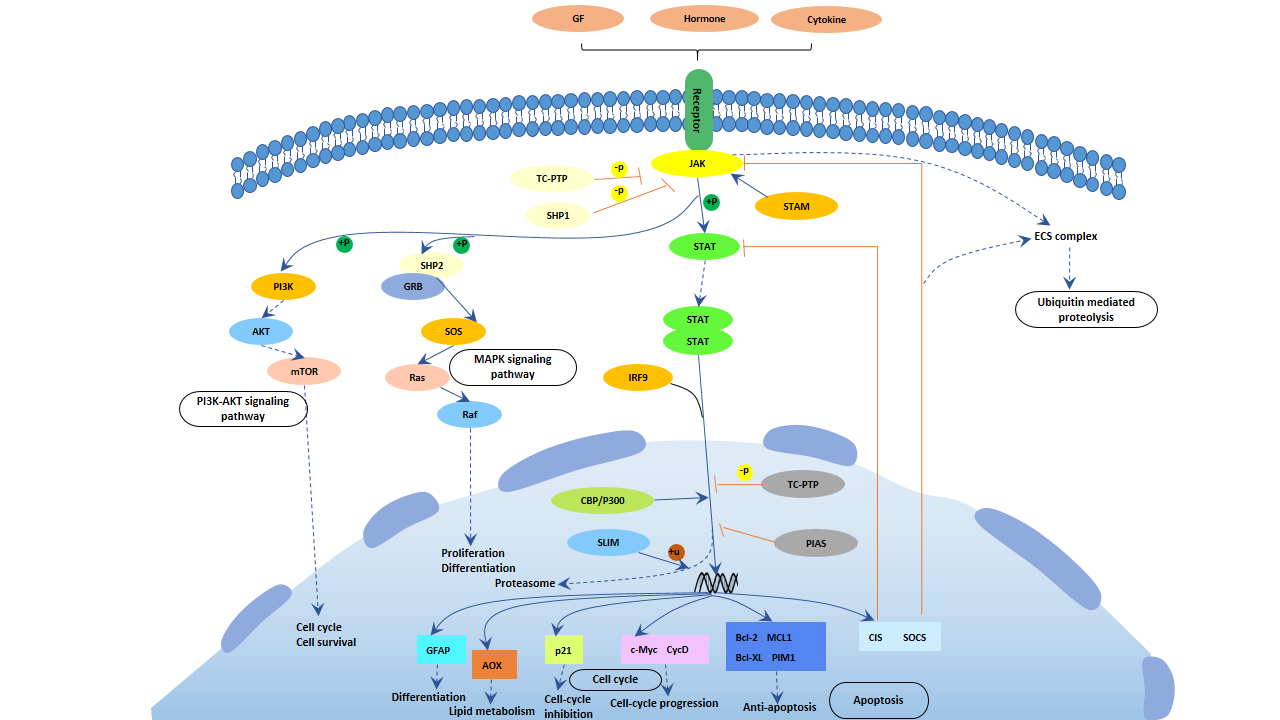
The Janus kinase‑signal transducer and activator of transcription (JAK/STAT) cascade refers to a continuous intracellular protein interaction network that transmits extracellular stimulation signals into cells to trigger downstream biological responses. This signal transduction module exists widely in mammalian somatic cells and participates in the regulation of diverse physiological activities.
Core Biological Functions of the JAK‑STAT Signaling Pathway
The core function of the JAK‑STAT signaling pathway lies in delivering extracellular biochemical signals into the cell nucleus, thereby initiating DNA transcription and inducing the expression of target functional genes. The regulated genes cover multiple critical biological processes, including immune response, cell proliferation, cell differentiation, programmed cell death (apoptosis), and tumorigenesis. Among various intracellular signaling systems, this pathway serves as the primary medium for cytokine‑mediated signal transmission and occupies an irreplaceable position in immune cell regulation.
Complete Activation Process of the JAK‑STAT Signaling Pathway
Three core components constitute the entire JAK‑STAT signaling system: Janus kinases (JAK family kinases), Signal Transducer and Activator of Transcription (STAT) proteins, and membrane receptors that specifically bind extracellular signaling molecules. For all mammalian species, the JAK/STAT pathway acts as the dominant signal transduction mechanism responding to a large spectrum of cytokines and growth factors.
The activation cascade starts when cytokines specifically bind to their matching membrane receptors. This binding event triggers conformational changes of receptor complexes, which further activates tyrosine kinase activity of JAK family proteins anchored on the intracellular receptor segment. Activated JAK molecules catalyze the phosphorylation modification of STAT proteins. After phosphorylation, STAT monomers form homologous or heterologous dimers, then migrate across the nuclear membrane into the cell nucleus to bind with specific gene promoter regions and adjust the transcription level of target genes.
Apart from mediating STAT activation, activated JAK kinases can also recruit multiple downstream effector molecules, including MAP kinases and PI3 kinase. These accessory signaling proteins further conduct secondary signal transmission through two independent downstream branches: the Ras‑Raf‑MAP kinase cascade and the PI3 kinase signaling axis, which jointly induce the activation of more types of nuclear transcription factors and enrich the diversity of cellular response outcomes.
Diseases Closely Linked to Abnormal JAK‑STAT Signaling
Functional disorder or abnormal activation of the JAK‑STAT signaling cascade is highly correlated with a wide range of immune system diseases. A large number of clinical and basic research data have confirmed that single nucleotide polymorphisms (SNPs) of STAT family genes carry clear disease relevance: STAT3 gene SNPs are strongly associated with Crohn’s disease, psoriasis and ankylosing spondylitis; STAT4 variants raise the risk of rheumatoid arthritis, Crohn’s disease, systemic lupus erythematosus and Sjögren’s syndrome; while STAT6 genetic polymorphisms are key susceptibility factors for asthma.
Furthermore, abundant research findings have verified the vital regulatory role of the JAK‑STAT pathway in autoimmune diseases and malignant tumors. Therefore, this signaling cascade has become a high‑value research target for new drug development. Ruxolitinib, a dual inhibitor targeting JAK1 and JAK2, has achieved significant therapeutic effects in polycythemia vera and myelofibrosis treatment, and it is the first JAK inhibitor (also named Jakinib) to obtain official approval from the FDA for clinical application.