
Research on diseases and disorders has been carried out in connection with the histone modifications pathway, including malignant neoplasms, carcinogenesis, cell transformation, neoplastic conditions, and carcinoma. The histone modifications pathway has also been studied in relation to methylation, DNA methylation, histone acetylation, chromatin remodeling, and histone methylation.
Histone modifications and DNA methylation are epigenetic marks that influence gene expression patterns. As illustrated in Figure 1, chromosomal DNA is wrapped around histones to form nucleosomes. Histones can undergo a variety of post-translational modifications (PTMs), particularly on their tails, which send signals leading to specific patterns of gene expression or repression. Certain histone modifications and DNA methylation can interact with each other, enabling additional layers of mechanisms to control and regulate gene expression.
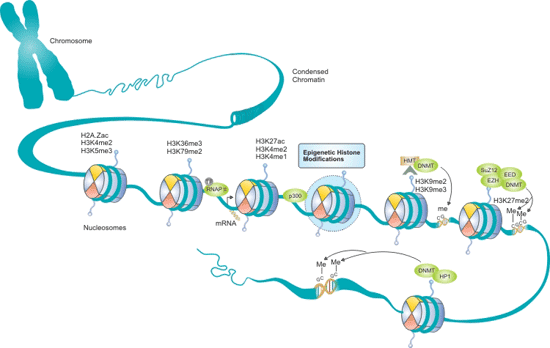
Figure 1. The Interplay between Histone Modifications and DNA Methylation
There are 5 histone families (H1-H5), which are divided into two categories: core histones (H2A, H2B, H3, and H4) and linker histones (H1 and H5). The post-translational modifications (PTMs) mentioned earlier include acetylation, methylation, phosphorylation, and ubiquitination. These modifications serve to regulate both the structure and stability of nucleosomes, as well as the recruitment of chromatin-binding proteins. Below, we summarize two interactive pathways of histone modifications: the H2A, H2B, and H4 Interactive Pathway and the H3 Interactive Pathway.
In general, based on their different functions, three types of enzymes are involved in the process of histone modification and its interaction with histones to affect chromatin structure and transcription: writers, readers, and erasers. Writers are enzymes that add PTMs, while erasers are enzymes that remove PTMs. Reader proteins bind to PTMs and act to regulate changes in chromatin structure and gene expression.
This interactive pathway focuses on the writers and erasers for histones H2A, H2B, and H4, as well as the amino acid residues they modify. As shown in Figure 2, Histone acetyltransferases (HATs) are writers that acetylate lysine residues, including histone H2A Lys5, H2B Lys5, 12, 15, 20, and H4 Lys5, 8, 12, 16. In contrast, the deacetylation of these residues is carried out by erasers called histone deacetylases (HDACs). Acetylation of lysine residues makes chromatin accessible to transcription factors and can substantially enhance gene expression.
Additionally, Histone lysine methyltransferases (KMTs) are writers that add methyl groups to lysine residues, which can be removed by erasers known as histone lysine demethylases (KDMs). Lysines can be mono-, di-, or tri-methylated, creating functional diversity at each methylation site.
Furthermore, multiple kinases and phosphatases can respectively phosphorylate and dephosphorylate serine, threonine, and tyrosine residues on histone proteins. The most well-known function of histone phosphorylation occurs during the cellular response to DNA damage, when phosphorylated histone H2A(X) marks large chromatin domains around the site of DNA breakage.
Finally, histone ubiquitination happens when small, 76-amino acid ubiquitin molecules are attached to lysine residues with the help of three specialized enzymes: E1-activating, E2-conjugating, and E3-ligase enzymes. If you wish to learn more about histone modifications or related antibody products, you can click on the article titled "Four Common Histone Modifications".
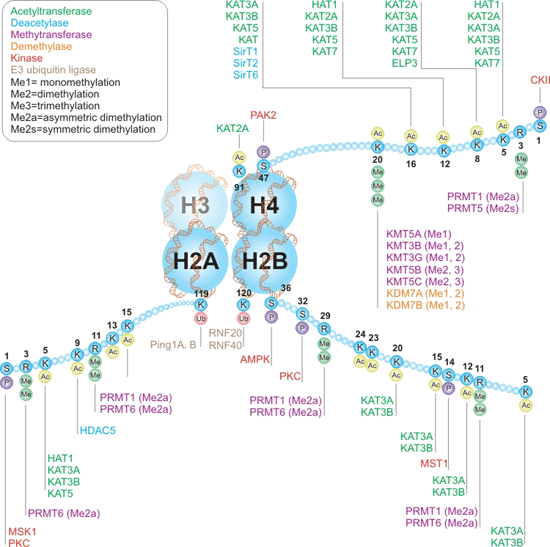
Figure 2. Writers and Erasers of Histones H2A, H2B, and H4 Interactive Pathway
Histone H3 is one of the five main histone proteins involved in chromatin structure in eukaryotic cells and also plays a crucial role in regulating chromatin structure and gene expression. Compared with the other four types of histones, the modifications of histone H3 only involve acetylation, methylation, and phosphorylation. These PTMs can occur at different residues on histone H3 and regulate various processes related to nuclear organization, chromatin structure, and the recruitment of chromatin-binding proteins (also referred to as reader proteins), as shown in Figure 3.
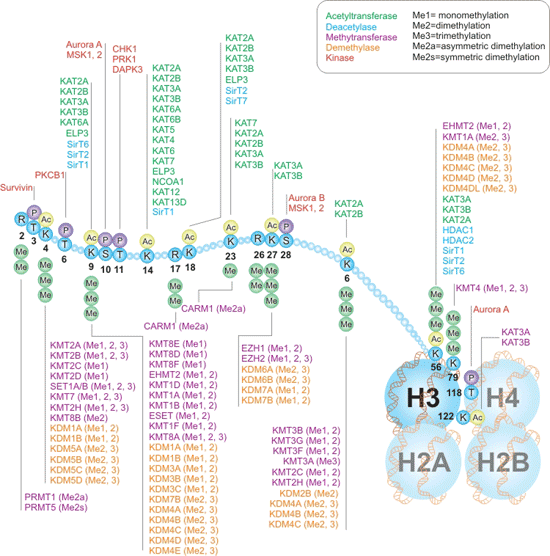
Figure 3. Writers and Erasers of Histone H3 Interactive Pathway