
Biomedical researchers adopt diverse experimental systems for laboratory investigations, which are broadly classified into in vivo and in vitro models according to experimental locations and complete biological system integrity. Picking a matched experimental scheme is a core decision in life science and medical research, directly determining the clinical transfer value and reliability of acquired experimental data.
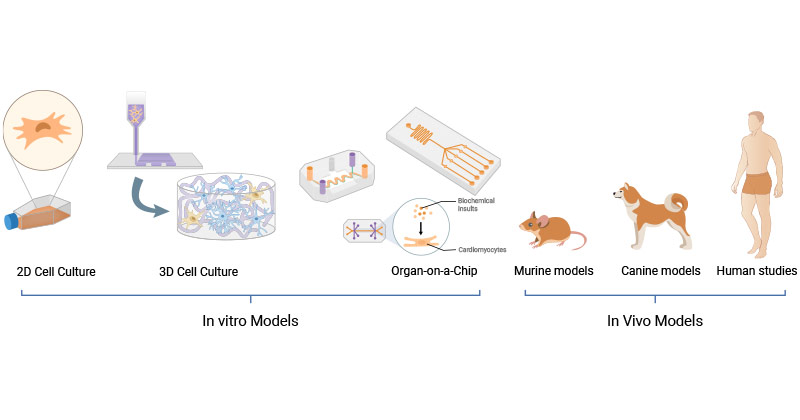
This article elaborates the essential distinctions between in vivo and in vitro systems, sorts out their respective strengths, drawbacks and applicable research scenarios, and offers clear references for researchers to design rational experimental schemes.
The term "in vivo" derives from Latin, meaning "inside a living organism". In vivo experiments are carried out within intact living subjects, including laboratory animals and human participants.
Such assays retain complete natural physiological microenvironments, enabling observation of crosstalk among multiple organs, systematic physiological feedback and holistic organism-level responses. They serve as the critical bridge to translate basic laboratory discoveries into clinical practical applications.
Common in vivo test systems cover animal model experiments and human clinical trials, covering basic physiological mechanism exploration, disease pathogenesis analysis, behavioral science observation and host-pathogen interaction evaluation.
- Laboratory mice, rats, rabbits and other rodents are the most widely adopted in vivo model organisms. Their genetic backgrounds, physiological indicators and behavioral patterns share high similarity with humans, making them ideal research carriers.
- Customized disease animal models reconstruct pathological processes inside living organisms, which can track disease progression, dissect pathogenic mechanisms and verify potential intervention strategies. Transgenic and gene-knockout mouse strains are routinely applied in oncology research to simulate tumor proliferation, metastasis and drug response characteristics.
- Animal behavioral and cognitive tests can provide important clues to interpret human mental activities and behavioral disorders.
- In vivo animal experiments can characterize the holistic immune responses triggered by pathogen infection, vaccine immunization and other stimuli, and systematically analyze reciprocal interactions between hosts and pathogenic microorganisms.
- After preliminary compound validation at the cellular level, candidate drug molecules must undergo animal in vivo evaluation to detect acute/chronic toxicity, drug absorption, distribution, metabolism, excretion (ADME) profiles and overall therapeutic efficacy before advancing to human trials. Animal tests constitute an indispensable segment of preclinical research, normally combined with complementary in vitro and ex vivo validation data.
Clinical trials, also named human subject trials, evaluate the safety performance and therapeutic efficacy of novel drugs, treatment regimens or intervention approaches in human bodies.
Only after sufficient efficacy verification and safety assessment in animal models can human clinical trials be initiated. All enrolled subjects receive continuous close monitoring throughout the trial cycle to record drug metabolic characteristics and pharmacokinetic parameters, so as to confirm whether the drug fits the targeted patient population.
Clinical trials are divided into multiple sequential phases with independent research objectives and assessment endpoints; each phase must reach preset evaluation standards to enter the next stage. The ultimate goal of clinical trials is to guarantee that new treatment modalities are safe, effective and clinically beneficial for patients.
In vivo experiments can analyze biological activities within complete living organisms, thus reflecting real physiological reactions and multi-level biological interactions more authentically.
Intact Organism Complexity
Assays are performed inside living individuals, allowing researchers to interpret biological processes under the background of integrated physiological systems.
It can capture complicated signal crosstalk among cells, tissues, organs and body systems, which is conducive to detecting systemic side effects and overall biological outcomes.
Native Physiological Microenvironment
In vivo models preserve natural physiological homeostasis, truly reflecting how living organisms respond and adapt to external treatment interventions.
Researchers can observe how organisms react to diet shifts, temperature changes, pathogen invasion and other external stimuli, and explore ecological interactions and behavioral rules accordingly.
In vivo models are extensively applied in toxicity assessment, new drug and therapeutic regimen verification, disease mechanism dissection, physiological function research and other medical research directions.
In Vivo Drug Efficacy & Toxicity Assessment
Shchekotikhin and colleagues evaluated the oral anti-tumor activity and acute toxicity of anthrafuran compounds using multiple in vivo systems including murine solid tumor transplantation models, leukemia models and human breast cancer subcutaneous xenograft models, and confirmed the remarkable anti-cancer potency of this new therapeutic candidate.
In Vivo Disease Model Establishment
Padmanabhan’s team constructed multiple fibrosis animal models covering different species and pathological stages, which clarify the molecular mechanisms of post-injury scar formation and fibrosis, and lay a foundation for transforming effective intervention schemes into clinical therapy.
In Vivo Toxicological Evaluation
Patel et al. adopted zebrafish as an in vivo model to detect toxic and teratogenic effects induced by plant extracts. The results verified that zebrafish embryo toxicity testing can reliably assess botanical drug toxicity, providing a substitute for higher vertebrate models and supporting the discovery of new natural medicines for human diseases.
Physiological & Pathological Mechanism Exploration
Baglietto-Vargas and research partners humanized the Aβ coding region within the mouse App gene and constructed hAβ-KI knock-in mice carrying non-mutant human Aβ fragments. These mice spontaneously develop age-related pathological lesions highly consistent with sporadic late-onset human Alzheimer’s disease (AD), serving as a reliable tool to analyze genetic, aging and environmental risk factors driving AD onset and progression.
Behavioral Science Research In Vivo
Sato’s group identified significant functional disorders in the medial prefrontal cortex (mPFC)-basolateral amygdala (BLA) neural circuit and neuromodulatory abnormalities in autism spectrum disorder (ASD) mouse models. Local or systemic drug intervention rescue experiments provide valuable theoretical support for developing novel ASD therapeutic strategies.
Immunology In Vivo Verification
Freitag et al. assessed the immune protection efficiency of Ad5-RBD and Ad5-S adenovirus vector vaccines in mouse models. Intranasal immunization markedly lowered respiratory tract viral loads after natural pathogen infection, which is expected to block severe COVID-19 onset and SARS-CoV-2 transmission chains.
Oncological In Vivo Studies
Cho K and co-workers combined hydrodynamic transfection (HT), sleeping beauty (SB) transposon technology and CRISPR/Cas9 editing to build genetically engineered mouse (GEM) liver cancer models. Optimized HT-based GEM models will further resolve the genetic drivers of hepatocarcinogenesis and identify novel therapeutic targets for liver cancer maintenance and progression.
Metabolic Mechanism Research
Yan Guo’s research team fed mice a high-fat diet (HFD) to establish an obese model, and verified that SF1 (steroidogenic factor 1) expressed in pancreatic beta cells sustains glucose-stimulated insulin secretion (GSIS) and helps beta cells adapt to obese metabolic stress. SF1 thus becomes a promising therapeutic target for obesity-associated diabetes.
The Latin phrase "in vitro" translates to "within glassware". In vitro experiments are implemented outside living organisms under artificially constructed laboratory conditions, normally conducted in test tubes, culture dishes and other lab consumables. Researchers mix purified biological components and reaction reagents to build controllable artificial reaction systems.
In vitro research relies on isolated biological materials including cultured cells, tissue slices and purified biomolecules, enabling precise variable isolation and fine-tuned experimental manipulation, which is ideal for dissecting detailed cellular and molecular mechanisms.
Cell culture systems are the most commonly used in vitro platforms for cellular phenotypic detection and molecular mechanism research. Most biochemistry and molecular biology quantitative assays are completed via in vitro experimental designs.
- Cell Culture-Based Assays: Monolayer adherent culture, 3D spheroid culture and organotypic tissue culture are widely applied for cell phenotype observation and drug testing.
- Cell Viability and Cytotoxicity Detection Assays: MTT assay, LDH release assay, Trypan blue exclusion staining for live/dead cell discrimination.
- Enzymatic Kinetic Analysis: Characterize enzyme kinetics, substrate specificity and cofactor regulatory effects under controlled reaction conditions.
- Biochemical & Molecular Biology Techniques: WB, ELISA, PCR, gene cloning, gene editing and protein purification.
- Protein Interaction Verification: Co-IP, pull-down and other assays to verify protein binding relationships.
- High-Throughput Drug Screening & Dose-Response Curve Analysis: Mass compound screening and concentration-effect relationship fitting.
- Cell Signaling Pathway Research: Phosphorylation detection, reporter gene assay for pathway activation quantification.
- Viral Culture & In Vitro Viral Research: Amplify viruses in cell lines to study replication and antiviral agents.
Precisely Regulable Experimental Conditions: Temperature, pH, reagent concentration and duration can be accurately controlled to eliminate external interference.
Simplified Biological System: Isolate single cell/tissue to simplify complex biological systems for targeted mechanism research.
Independent Variable Isolation: Single influencing factor can be separated for individual study, which cannot be achieved easily in vivo.
Compatible with High-Throughput Screening: Support automated parallel multi-compound and multi-group testing.
Excellent Experimental Repeatability: Uniform culture environment ensures stable and replicable test results.
Low Ethical Restrictions: Reduce animal usage and comply with the 3R ethical principle for laboratory animals.
Early-Stage In Vitro Drug Screening
Lenin and colleagues tested 65 candidate compounds and inhibitors on patient-derived glioma stem cells in 2D monolayer culture and 3D glioblastoma organoid models respectively. The TERT inhibitor costunolide markedly reduced tumor cell viability in both primary tumor models and chemoradiotherapy pre-treated tumor models. This optimized in vitro screening workflow provides a new strategy for personalized precise therapy of recurrent glioblastoma.
In Vitro Toxicology Assessment
Sharma’s team exposed human bronchial epithelial BEAS-2B cells and air-liquid interface MucilAir tissue models to reactive silane vapor for toxicity detection. The results proved that these two in vitro test systems can reliably predict human respiratory tract toxicity risks caused by inhalation chemical exposure.
In Vitro Disease Model Construction
Bonaventura et al. adopted iPSC-derived differentiated cells to build in vitro disease models for multiple neurological disorders including Alzheimer’s disease, Parkinson’s disease, ALS and fragile X syndrome. iPSC lineage-specific neural differentiation technology can reconstruct partial pathological features of individual neurological diseases in vitro, supporting personalized drug efficiency evaluation.
In Vitro Fertilization (IVF) Technology
IVF is a mature assisted reproductive technology for infertile couples. Oocytes retrieved from female patients are fertilized with sperm cells in laboratory culture dishes to form fertilized embryos. This technology has greatly promoted reproductive medicine development and brought fertility treatment options to numerous infertile families. IVF can also be combined with preimplantation genetic testing to screen embryos carrying pathogenic gene mutations before embryo transplantation.
Organ-on-a-Chip Microphysiological Systems
Organ-on-a-chip (OOC) is an emerging miniaturized biomimetic in vitro platform that reconstructs key physiological microenvironment features of human organs. Integrating cell biology, micro-processing engineering and material science technologies, organ-on-a-chip systems outperform traditional static cell culture models in physiological simulation degree, and have become powerful tools for drug screening, toxicity prediction, disease modeling and personalized precision medicine research.
Both in vivo and in vitro experimental systems are irreplaceable cornerstones of modern life science research, with unique strengths and targeted applicable research directions respectively.
| Comparison Item | In Vivo Experiments | In Vitro Experiments |
|---|---|---|
| Experimental Location | Inside intact living animals or human subjects | Ex vivo artificial systems (cell culture dishes, test tubes etc.) |
| Physiological Environment | Complete native in vivo homeostasis | Manually constructed simplified reaction environment |
| System Complexity | High complexity, full inter-organ systemic crosstalk | Relatively simplified, focusing on isolated cells/tissues |
| Research Cost | High overall expenses | Low cost and low consumption |
| Experimental Cycle | Long experimental period | Fast data acquisition and short cycle |
| Result Translation | High clinical transfer potential | Preliminary screening data needs subsequent in vivo validation |
| Variable Control Ability | Difficult to fully eliminate confounding factors | Each variable can be independently regulated accurately |
| Ethical Limitations | Strict ethical approval and supervision required | Minimal ethical constraints, conforms to animal experiment 3R rules |
- In vivo and in vitro experiments are mutually complementary rather than mutually exclusive, jointly forming a complete research evidence chain for biological phenomena interpretation.
- In vitro screening is normally adopted in early research phases, followed by in vivo animal verification for result confirmation.
- Combined application of two systems accelerates innovative progress in clinical medicine, new drug development and fundamental life science research.
When selecting experimental models, researchers need to comprehensively judge three key factors: target biological system complexity, required physiological simulation authenticity and actual experimental operability.
In vivo and in vitro models occupy indispensable positions in disease diagnosis, drug pharmacology & toxicology detection and basic life science exploration. In vitro research lays preliminary experimental foundations, while in vivo research verifies overall organism-level actual effects. Most mature and reliable research conclusions rely on combined design of both experimental systems.