
Performance Evaluation & QC Standards for ELISA Detection Kits
Our rigorous manufacturing processes and strict quality control protocols enable us to deliver ELISA kits with superior performance and consistent results for every assay you conduct. ExKits ELISA kits provide customers with the expected linearity range, linearity, Lower Limit of Detection, precision, recovery, stability, and natural sample detection capabilities, all backed by comprehensive validation testing. This testing covers multiple aspects, taking the Human IL-6 (Interleukin 6) ELISA Kit (XEH1100) as an example.
1
Linearity range
The linearity range allows for the accurate calculation of actual test sample values. The following data is for reference only. A standard curve must be run with each assay.
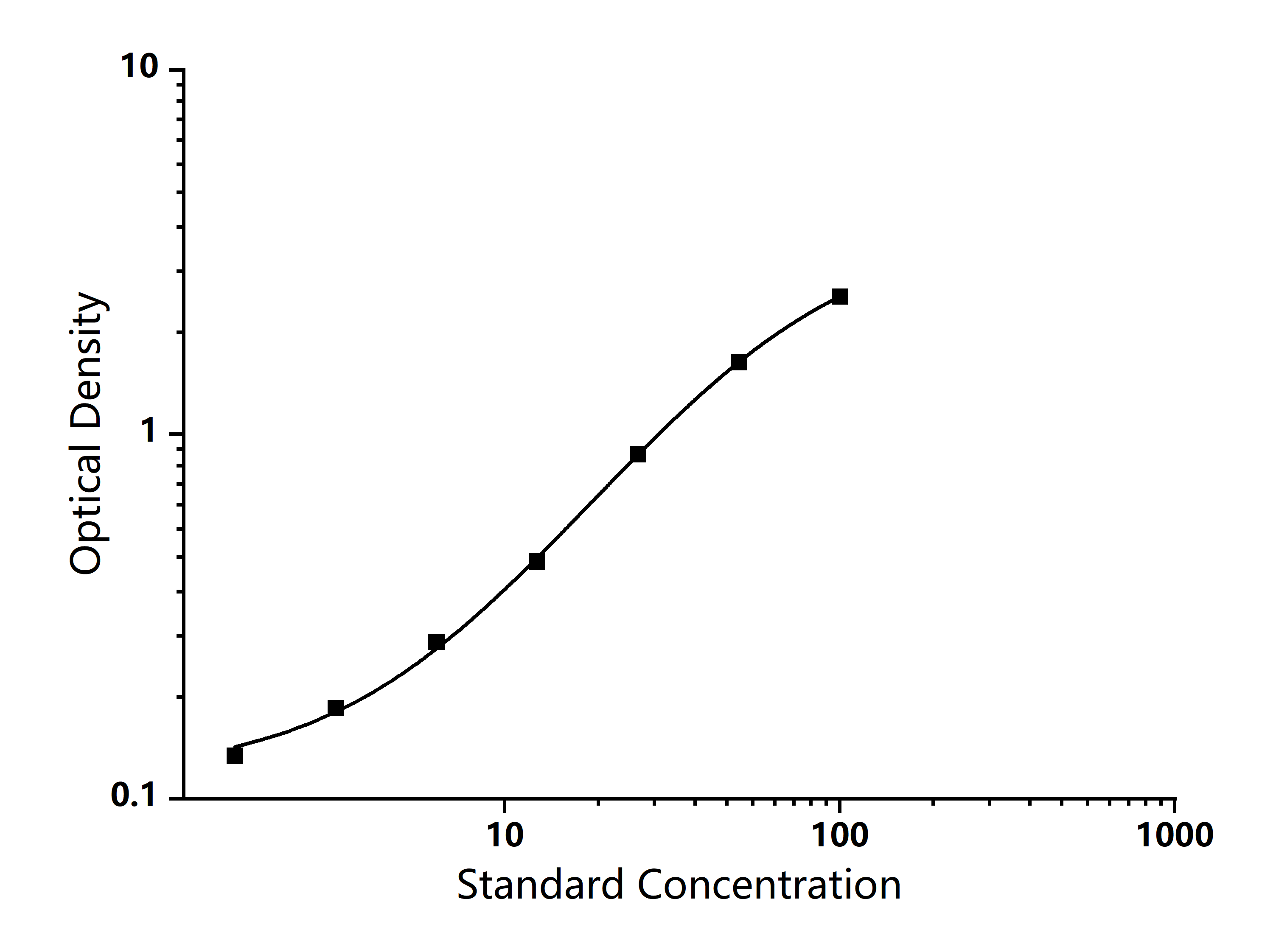
2
Linearity
Linearity serves as an indicator of experimental accuracy and specificity. To evaluate the linearity of the assay, samples were spiked with high concentrations of the analyte in various matrices and then diluted with Sample Diluent to bring the values within the dynamic range of the assay. Results are presented as a percentage of the observed value.
To assess the linearity of the assay, samples containing and/or spiked with high concentrations of Human IL-6 in various matrices were diluted with the Reference Standard & Sample Diluent to produce samples with values within the dynamic range of the assay.
Serum, Plasma, Cell Culture samples were diluted at ratios of 1:2, 1:4, 1:8, and 1:16.
The tested values fell between 80-120%, demonstrating excellent linearity.
3
LLD (Lower Limit of Detection)
The Lower Limit of Detection (LLD) is a key indicator of assay sensitivity. A lower LLD corresponds to higher sensitivity of the kit.
4
Precision
Precision measures the repeatability of assay results, expressed as a coefficient of variation (CV) relative to the mean value. Higher precision indicates better repeatability. Two key types of precision are evaluated: intra-assay precision and inter-assay precision.
Intra-Assay Precision (Precision within an assay): Three samples of known concentration were tested twenty times on one plate to assess intra-assay precision. Inter-Assay Precision (Precision between assays): Three samples of known concentration were tested in twenty separate assays to assess inter-assay precision. Assays were performed by at least three technicians using two lots of components.
5
Recovery
Recovery is an indicator of experimental accuracy and specificity, reflecting the degree of analyte loss during sample analysis. A higher recovery rate indicates greater assay accuracy.
The recovery of Human IL-6 spiked to three different levels in samples throughout the range of the assay in various matrices was evaluated.
6
Specificity
Specificity is a critical performance indicator for ELISA kits. ExKits selects high-specificity raw materials to ensure the excellent specificity of its ELISA kits, and conducts cross-reactivity and interference analysis to confirm that only the target analyte is recognized and detected.