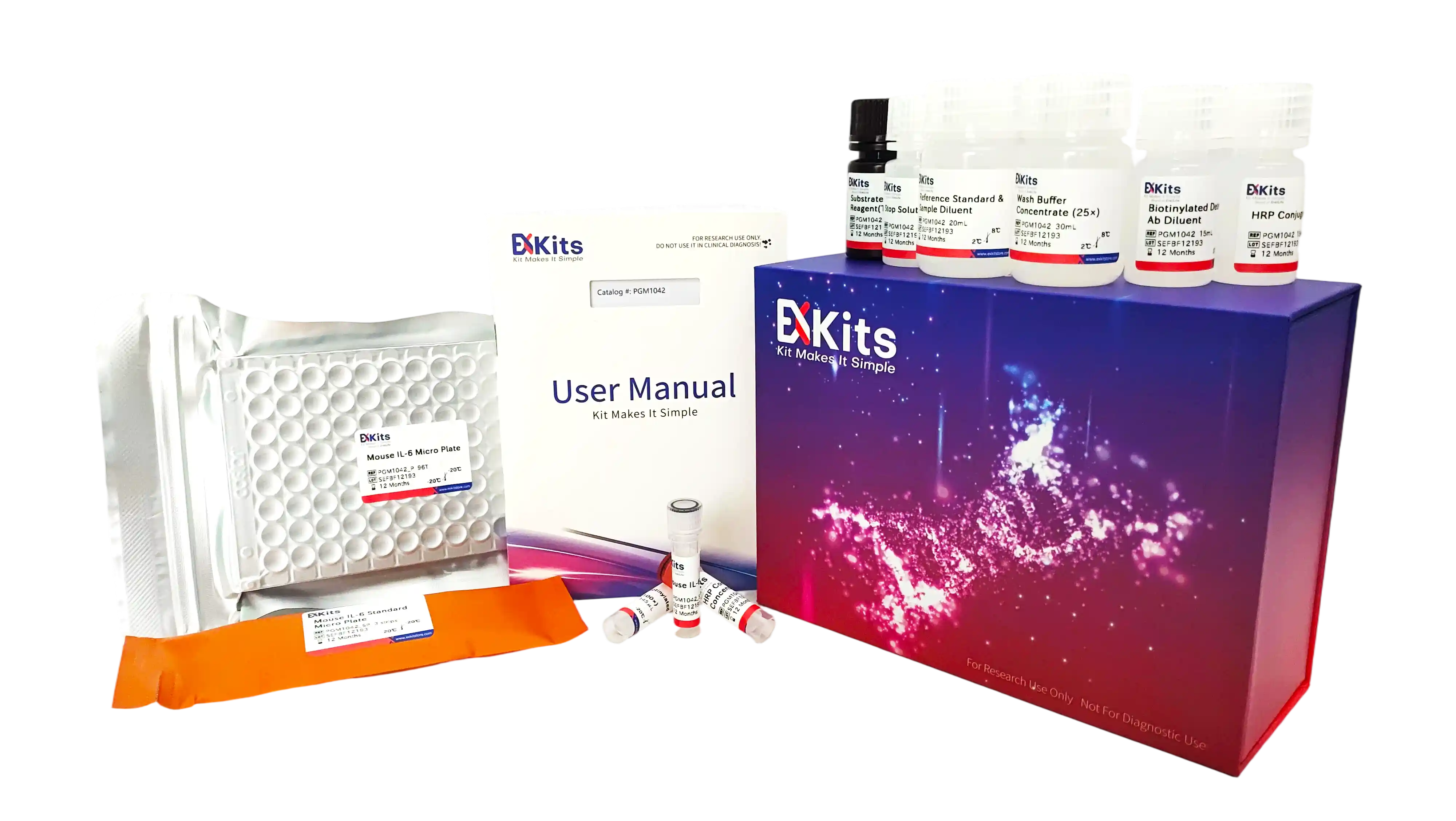

Four Core Differentiated Product Designs
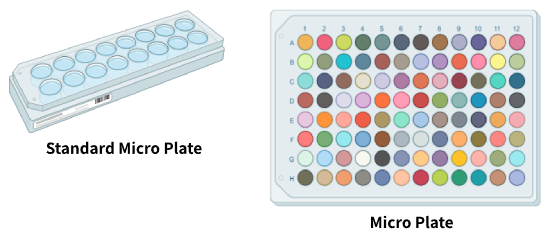
Independent External Standard Curve Strips
Physically separate calibration area from sample detection area, fully release all 96-well sample positions to boost single-plate throughput.
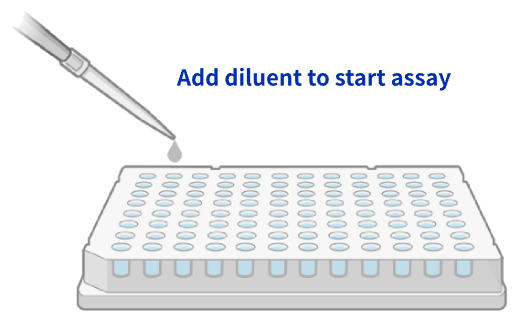
Pre-Made Dilution-Free Standard Curves
Complete concentration gradients pre-formulated at production, eliminating standard reconstitution, serial dilution and sequential pipetting steps.
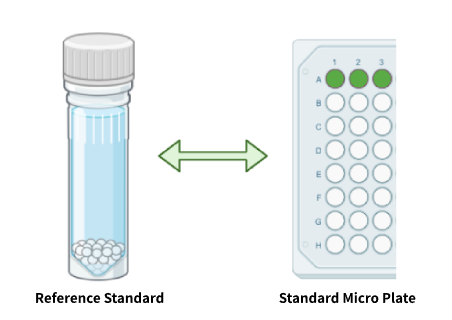
Dual-Mode Lyophilized Standard Backup
Supports both rapid screening and customized precise calibration. Compatible with pilot tests, high-volume batch detection and high-accuracy validation workflows.
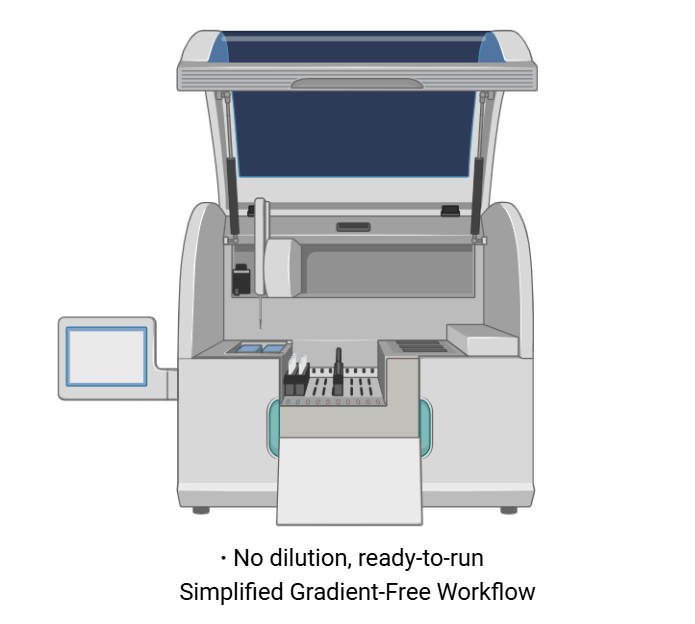
Simplified Gradient-Free Workflow
Greatly reduce manual operation steps, natively compatible with automated ELISA liquid handlers, lowering programming and run setup barriers.
Full-Scenario Laboratory Application Solutions
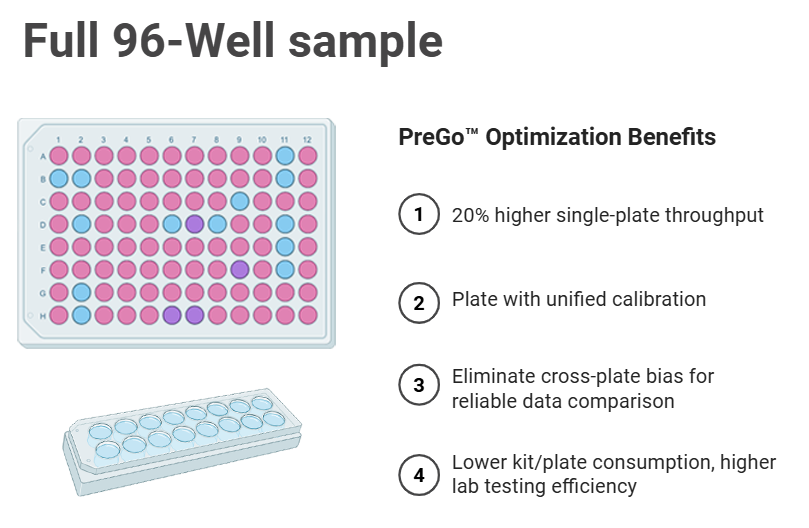
Large Cohort & High-Throughput Compound Screening
Existing Workflow Status
Conventional kits occupy sample wells for standard curves. When sample counts approach 96, multiple plates and kits are required, generating separate calibration references that introduce inconsistent data readouts. Repeated curve preparation across runs extends experimental timelines and raises reagent consumption.
PreGo Optimization Benefits
The external independent curve strip enables full 96-well sample loading with 20% higher single-plate throughput. Up to 96 samples can be completed within one kit and one plate under a unified calibration reference, eliminating cross-plate systemic bias and ensuring consistent comparison across time-series and grouped data. Fewer plates and kits are consumed, boosting efficiency for shared instrument platforms and third-party contract testing labs.
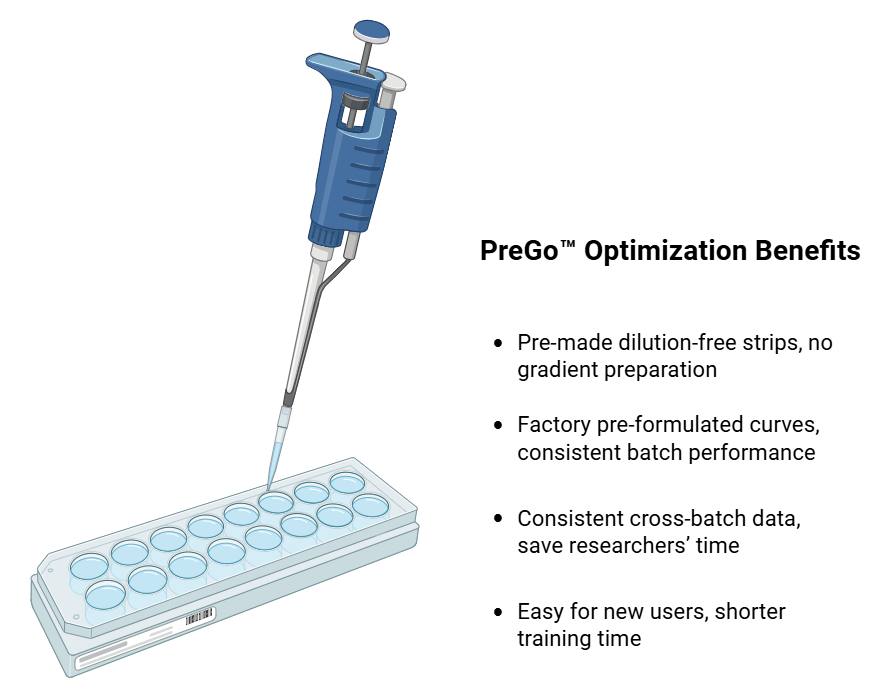
New Lab Staff & Long-Term Repeated Assays
Existing Workflow Status
Traditional ELISA requires multi-step manual handling: standard reconstitution, concentration conversion, serial dilution and sequential low-to-high pipetting. The steep learning curve extends training cycles for new users. Recurring curve preparation consumes core research hours, while repeated reconstitution may cause minor standard activity fluctuations over long-term projects.
PreGo Optimization Benefits
Pre-made dilution-free strips remove all pre-assay gradient preparation. No concentration calculation or strict pipetting sequence rules are needed; only dilution buffer and samples are required to start the assay, enabling new operators to generate reliable data quickly with shortened training cycles. Factory-standardized pre-formulated curves deliver consistent batch performance, freeing up researcher time. The matched lyophilized standard can be prepared as one bulk working solution for multi-run shared calibration, enabling consistent cross-batch data comparison for long-term projects.
Academic Research & Manuscript Publication Assays
Existing Workflow Status
Samples exceeding single-plate capacity require split-plate testing with independent curve preparation on each plate, creating separate calibration baselines that widen data dispersion and weaken comparability, failing to meet strict academic reproducibility standards.
PreGo Optimization Benefits
All samples can be processed on a single plate under one unified calibration standard, eliminating cross-plate systemic deviation and lowering data dispersion to improve assay reproducibility. The streamlined standardized workflow simplifies method section writing for manuscripts, reducing revision requests from journal reviewers and supporting high-quality publishable datasets.
High-Volume Unattended Automated Processing
Existing Workflow Status
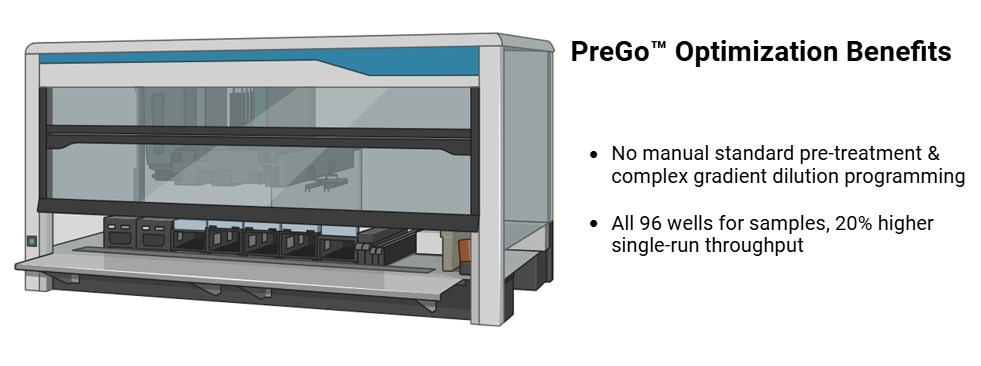
While premium automated liquid handlers support programmable serial dilution, constructing multi-step transfer, gradient mixing and segmented pipetting logic demands lengthy programming, debugging and validation with a steep technical barrier. Standard curve wells occupy sample positions and reduce single-run processing capacity, limiting full utilization of automated equipment.
PreGo Optimization Benefits
No manual standard pre-treatment or complex gradient dilution programming is required. Simplified liquid handling logic drastically cuts script writing and debugging time, enabling fully unattended workflows from sample loading through incubation, washing and plate reading. All 96 sample wells are fully released to lift single-run throughput by 20%. For multi-plate long-run calibration, bulk lyophilized standard working solution can be pre-loaded into instrument reagent reservoirs to sustain continuous automated runs with minimal manual intervention.
Routine & High-Frequency Lab Testing
Existing Workflow Status
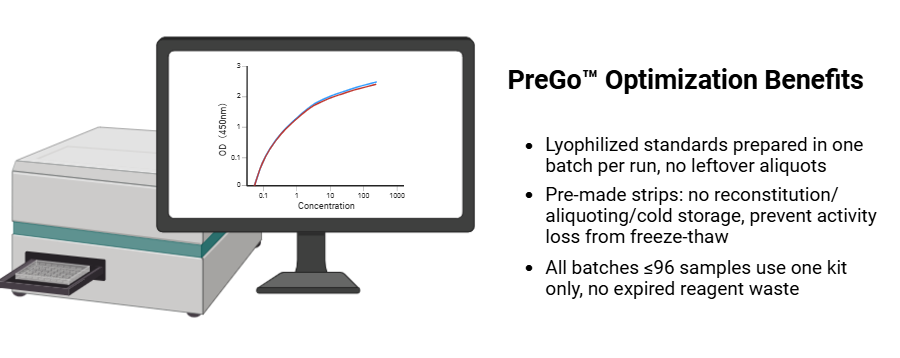
Sample batches between 80–96 wells demand two kits, leaving unused reagents to expire over storage. Serial dilution consumes large volumes of EP tubes and disposable pipette tips. Repeated reconstitution, aliquoting and freeze-thaw cycles degrade standard protein activity and generate reagent waste.
PreGo Optimization Benefits
All batches under 96 samples can be completed with one kit only, eliminating unused expired reagent waste. Serial dilution accessory consumables are fully removed to cut pre-assay preparation time and lower combined labor & plasticware costs. Pre-made strips require no reconstitution, aliquoting or cold storage to avoid activity loss from freeze-thaw cycles. Matched lyophilized standards are prepared in one single batch per run with no leftover aliquots, maintaining stable uniform calibration across all assays.
Pilot Condition Screening + Large-Scale Formal Assays
Existing Workflow Status
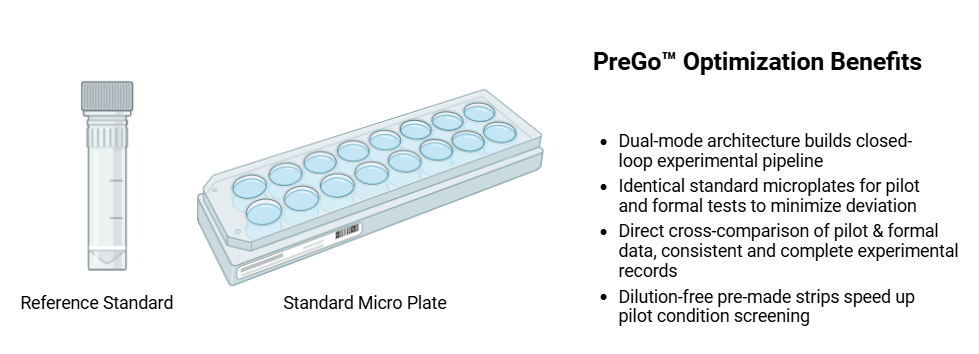
Pilot screening and formal bulk testing require separate standard curve preparation with slightly different calibration baselines. Concentration ranges identified in pilot trials cannot be directly cross-referenced against formal assay data, breaking experimental continuity and triggering redundant repeat screening that wastes lab resources.
PreGo Optimization Benefits
The dual-mode architecture creates a closed-loop experimental pipeline: dilution-free pre-made strips accelerate rapid condition screening in pilot stages, while independent curve strips deliver full single-plate throughput for formal large-scale testing. Both pilot screening and formal large-scale testing adopt identical standard microplates to minimize experimental deviation. For unified calibration alignment, the matched lyophilized standard can be prepared into one shared bulk working solution as needed to meet testing volume requirements, enabling direct cross-comparison between pilot and formal datasets for logically consistent, complete experimental records.
Six Core Optimization Value Highlights
External independent standard curve strips unlock full 96-well sample capacity, lifting single-plate throughput by 20% and eliminating cross-plate bias & reagent waste.
Dilution-free pre-formulated curves remove all serial gradient preparation steps, lowering technical barriers for consistent data output by new lab staff.
Single unified calibration baseline per plate improves data reproducibility and experimental rigor to meet academic publishing standards.
Streamlined workflow compatible with automated liquid handlers, removing complex gradient programming and supporting long-duration unattended runs.
Cut consumption of kits, disposable plasticware and manual labor hours to reduce overall lab operational expenses.
Dual-mode dual-calibration system adapts to rapid screening and high-precision validation, forming a seamless data pipeline from pilot to formal assays.
Product Gallery & Technical Specifications